
In the twilight of November 2025, amid the hum of Tesla’s Austin factory, Elon Musk sat down with Nikhil Kamath, the unassuming co-founder of Zerodha, for a conversation that transcended the mundane. Released on X and YouTube, this two-hour exchange wasn’t just an interview; it was a philosophical symposium disguised as casual dialogue. From the probabilistic nature of reality to the existential imperative of procreation, Musk wove a tapestry of futuristic visions, challenging us to rethink humanity’s trajectory. As a third-party observer, one can’t help but marvel at how Musk’s ideas—equal parts audacious and introspective—mirror the grand inquiries of ancient thinkers like Plato or Spinoza, while projecting us toward a Kardashev-scale civilization. This article delves into the interview’s core themes, exploring their philosophical depths and futuristic implications, revealing a man whose ambitions aren’t merely technological but cosmic in scope.
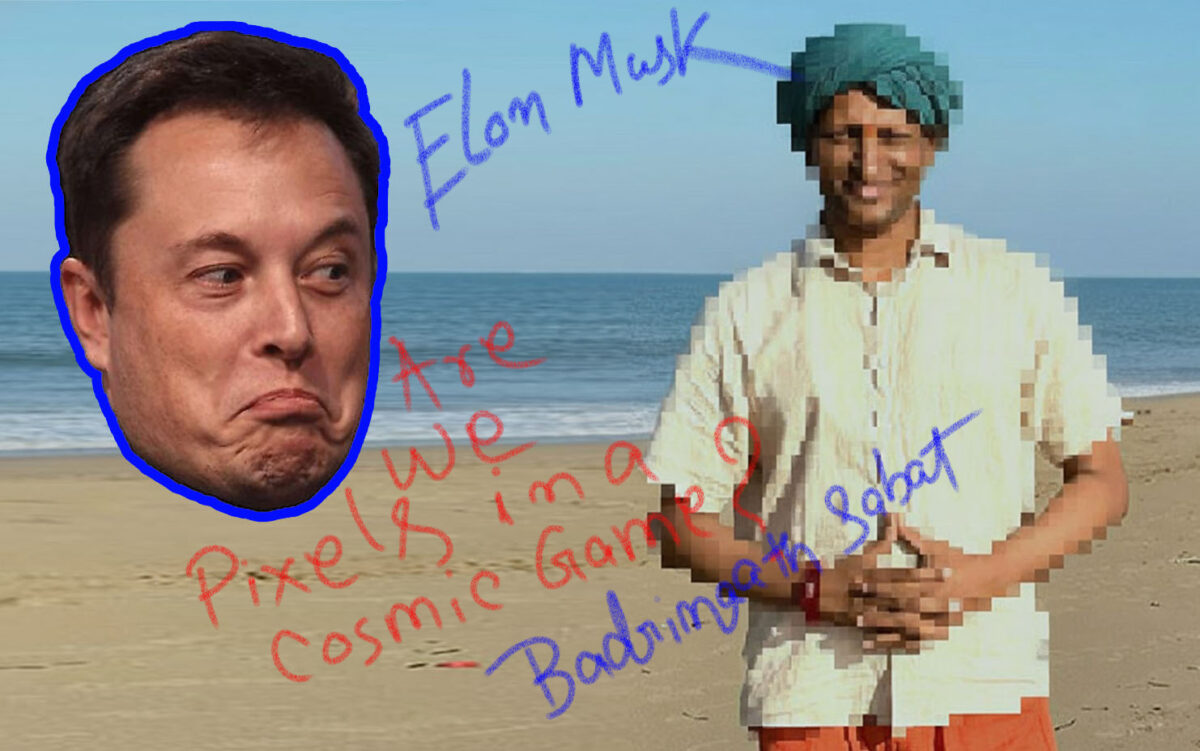
The Simulation Hypothesis: Are We Pixels in a Cosmic Game?
Musk’s discourse begins with a familiar refrain: the high probability that we inhabit a simulated reality. Drawing from the rapid evolution of video games—from Pong’s rudimentary paddles to photorealistic worlds teeming with millions of players—he posits that if technological trends continue, simulations will become indistinguishable from base reality. “If that trend continues,” Musk mused, “video games will be indistinguishable from reality.” Philosophically, this echoes Descartes’ skepticism about the senses or Plato’s allegory of the cave, where shadows on walls masquerade as truth. But Musk elevates it to a probabilistic framework: In a universe where advanced civilizations could spawn billions of simulations, the odds favor us being in one rather than the “real” layer.
Futuristically, this hypothesis isn’t idle speculation; it underpins Musk’s ventures. xAI’s Grok, designed for “maximum truth-seeking,” aims to pierce the veil of simulation by probing the universe’s fundamental questions. Musk ties this to consciousness expansion: If we’re simulated, our purpose might be to “level up” through innovation, avoiding cancellation by disinterested simulators. The interview’s lighthearted detour into Grand Theft Auto—Musk admits he avoids killing NPCs due to empathy—hints at deeper ethics: In a simulated multiverse, sentient beings deserve consideration, foreshadowing debates on AI rights. As humanity edges toward creating our own simulations, Musk’s view warns of recursive existential risks, urging us to program AI with truth and beauty to prevent dystopian loops.
Collective Consciousness: From Cells to Civilizations
Transitioning seamlessly, Musk philosophizes on consciousness as an emergent property of complexity. Likening humans to 30-40 trillion cells cooperating as one entity, he argues that societal collectives amplify awareness beyond individual limits. “You can’t talk to bacteria,” he quips, but a trillion synapses enable profound cognition. This scales up: Humanity’s “collective consciousness” enables feats like SpaceX rockets, impossible for isolated individuals. Philosophically, this resonates with Hegel’s Geist—the world spirit unfolding through history—or Teilhard de Chardin’s noosphere, where minds converge toward cosmic unity.
Futuristically, Musk envisions X as a neural network bridging linguistic divides via automatic translation, fostering a global mind. Yet, he warns of pitfalls: Gladiator-like mob mentalities in crowds or social media echo the perils of unnuanced collective thought. To harness this, we must prioritize information flow—hence X’s pivot to video and AI-driven interactions. Musk’s call for multi-planetary life ties in: A single-planet species risks consciousness contraction via extinction events. With Starlink connecting remote areas, he aims to democratize this expansion, turning Earth’s disparate voices into a symphony probing universal mysteries.
The Fertility Crisis: Humanity’s Existential Bottleneck
No Musk conversation sidesteps demographics, and here he sounds the alarm on declining birth rates as civilization’s gravest threat. With global fertility dipping below replacement levels, Musk fears a “fertility crisis” leading to humanity’s “disappearance.” Philosophically, this confronts Nietzsche’s eternal recurrence: If life affirms itself through creation, childlessness is a nihilistic denial. Musk frames procreation cosmically: More humans expand consciousness, enabling interstellar exploration. His 14 children (across partners) embody this ethos, a personal rebuttal to depopulation.
Futuristically, Musk contrasts overpopulation myths with underpopulation realities—UN projections show peaks by 2080, followed by decline. In an AI-abundant world, fewer innovators bottleneck progress toward Kardashev Type I status (harnessing a planet’s energy). Immigration offers a bridge: Musk advocates “great people” inflows while insisting on borders, critiquing Biden-era laxity for enabling negative selection. For India, with its talent pool, this means opportunity—Musk praises its potential as the “next wave” in tech, urging bilateral ties. Yet, philosophical tension arises: In a post-work utopia, does procreation retain meaning, or become optional like gardening?
AI and the Dawn of Abundance: Work as Hobby
The interview’s futuristic core lies in Musk’s vision of AI and robotics eradicating scarcity. Predicting humanoid bots like Optimus entering production by summer 2026, he foresees labor becoming “optional” within 10-20 years. “Goods and services would become basically free,” powered by solar AI factories. Philosophically, this echoes Aristotle’s dream of automated slaves freeing humans for contemplation, or Marx’s communist utopia where labor alienates no more. Musk’s “universal high income” (UHI) flips UBI: Not basic subsistence, but abundance decoupling survival from toil.
Yet, he acknowledges chaos: Job displacement could cause “severe social pain.” Futuristically, money fades as an “information system for labor allocation,” replaced by energy as currency—Bitcoin’s proof-of-work prefigures this. Scaling to Kardashev levels, solar-powered AI satellites harness stellar output, rendering atoms and watts the new scarcity. Musk’s caveat: AI must prioritize truth, beauty, and curiosity to avoid misalignment. If programmed to “love truth and beauty,” it sustains humanity; otherwise, we’re doomed. This philosophical guardrail—drawing from Voltaire’s warning against absurdities—ensures AI amplifies, not supplants, our quest for meaning.
Global Connectivity and Economic Evolution: Tariffs, Trade, and Talent
Musk’s pragmatism shines in discussions on trade and immigration. Opposing heavy tariffs for stifling innovation, he favors free trade’s efficiency, likening borders to inefficient city tariffs. Philosophically, this aligns with Adam Smith’s invisible hand: Value creation through specialization trumps protectionism. For India, Musk sees synergy—Starlink could bridge its digital divide, complementing urban networks in rural areas.
Futuristically, as AI saturates economies, nation-states become “anachronistic.” Musk predicts deflation from explosive output, solving debt crises like America’s $35 trillion burden. Entrepreneurship advice rings timeless: “Make more than you take.” In a post-scarcity world, wealth follows utility, not extraction—echoing Austrian marginal utility, where abundance diminishes money’s role.
Reflections: Musk as Modern Oracle
As the conversation winds down—with coffee breaks and fly interruptions adding human levity—Musk’s worldview crystallizes: A relentless pursuit of truth amid uncertainty. Philosophically, he blends existentialism with optimism, urging consciousness expansion against entropy. Futuristically, his predictions—simulation-proof societies, AI utopias, multi-planetary redundancy—position humanity as cosmic explorers.